

The Juice That Rules Us
(hormones explained, minus the overwhelm)

I’m intrigued how they often get blamed for virtually anything: from bad moods to breakouts, energy dips to emotional spirals. But what are hormones, really? And what role do they actually play in our day-to-day lives, especially during big transitions like trying to conceive, postpartum, or even just making it through a stressful week?
Here’s a grounded, science-backed and concise (well, I tried) breakdown of the hormone landscape - minus the sensationalism, plus real citations you can explore for yourself.
What Are They?
Hormones are chemical messengers made by endocrine glands. They travel through your bloodstream to organs and tissues, helping regulate everything such as:
metabolism
sleep and stress response
mood and energy
reproductive health and fertility
Basically: if it feels like hormones rule your life (which they do).
There are many different hormones, so here’s an overview of the place of production for each hormone and their function:
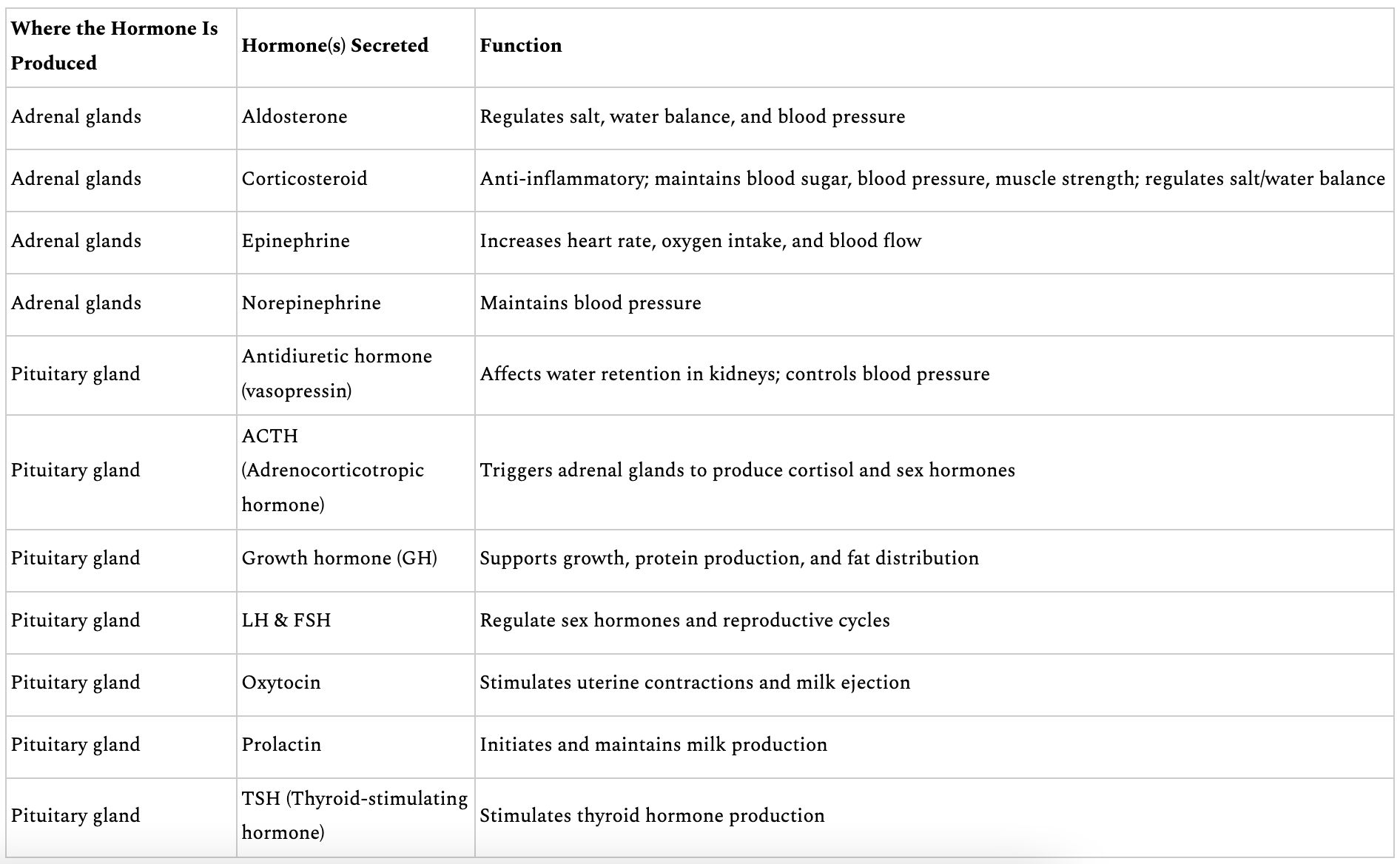
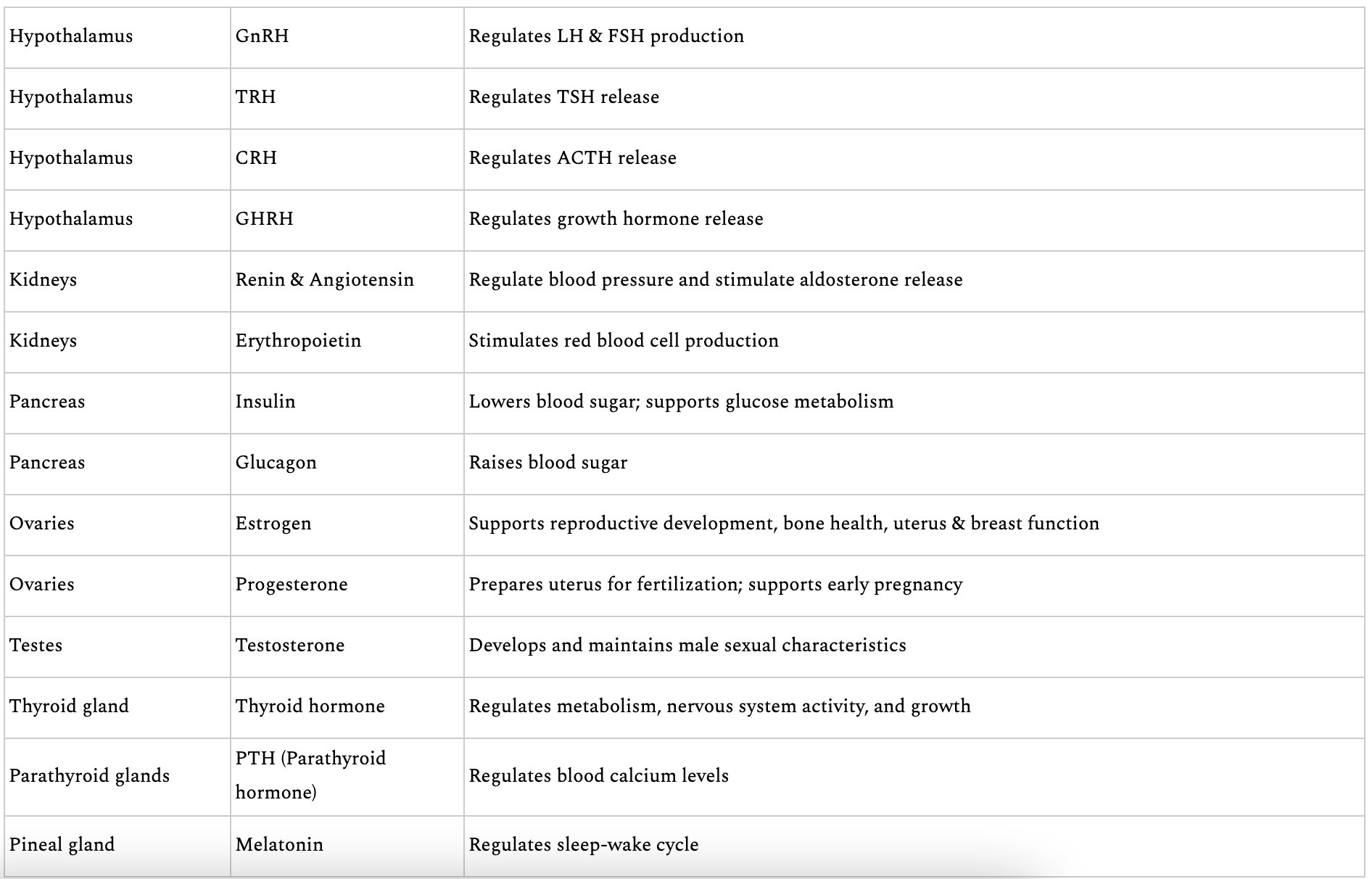
Before Baby
What to Know About Hormones When You're Trying to Conceive
Whether you’re actively trying to fall pregnant or just preparing for the idea of motherhood, understanding your hormone health is one of the most empowering things you can do.
“The hypothalamic-pituitary-gonadal axis coordinates the production of sex hormones through tightly regulated feedback loops that are critical for ovulation, fertility, and overall reproductive health.”
(Strauss & Barbieri: Yen & Jaffe’s Reproductive Endocrinology, 2020)
Translation?
Your brain and reproductive system are in constant, delicate conversation and that dialogue affects everything from mood to metabolism to fertility.
It’s not all in your head (but it kind of is).
The key players
Cortisol – the “stress hormone.” Helps us function under pressure, but chronically elevated levels can disrupt sleep, mood, and ovulation.
Estrogen – critical for reproductive function, bone density, mood regulation, skin health.
Progesterone – essential in the second half of the cycle and in early pregnancy; calming, grounding, often underappreciated.
LH & FSH – regulate ovulation and are key to understanding your fertile window.
“Subtle hormonal imbalances often precede infertility and may be modifiable with lifestyle interventions.”
— Fauser et al., The Lancet, 2011
If you’re keen to dive deeper, this is a good place to start.
Why This Matters (even if you’re not yet trying to conceive)
Cycle awareness = health awareness
Irregular periods, painful cramps, or intense PMS aren’t just “normal”, they’re messages worth listening to.Stress matters
High cortisol can suppress ovulation. Overtraining, under-eating, and burnout don’t just feel bad, they also mess with your hormonal rhythm.Data, not drama
Testing your thyroid, AMH, estrogen, or progesterone isn’t just for fertility clinics. It can be part of understanding your baseline.
Knowing your hormonal landscape before you conceive doesn’t guarantee a smooth journey, but it gives you more information, more agency, and often, more peace of mind.
Why This Matters in Motherhood
Postpartum brings some of the most dramatic hormonal shifts of your life.
Estrogen and progesterone, the hormones that carried you through pregnancy, plummet in the days after birth. At the same time, oxytocin and prolactin surge, especially with skin-to-skin contact, breastfeeding, and bonding.
It’s not just a shift - it’s a total hormonal reconfiguration.
And this isn’t happening quietly in the background. These changes reshape:
Mood and emotional regulation
Sleep patterns
Energy
Cognitive clarity
Identity and bonding
We’re told postpartum is a time of adjustment. But the truth is: your entire internal landscape has changed.
What That Actually Feels Like
Crazy emotional intensity? Not weakness: it’s neurochemical.
The weepiness, the wired-but-tired feeling, the sudden crash after moments of big joy: hormonal shifts.
Your brain feels like it’s been bubble-wrapped? Estrogen supports cognition and it’s just crashed.
The visceral bond with your baby, the rush of protectiveness: that’s oxytocin.
The rollercoaster? It’s real. You’re not imagining it.
Wild Times
Pregnancy is dramatic, yes, but postpartum is faster, steeper, and less talked about.
Your body goes from high-hormone support mode to sudden withdrawal, while simultaneously producing milk, healing tissue, recalibrating organs, and navigating a brand-new identity.
It’s like rebooting your entire system while holding a baby.
So if you’ve ever wondered:
Why am I feeling so much all the time? Why can’t I get “back to normal” faster? Why does this feel so disorienting, even though I love my baby?
This is why.
Not because you’re not coping, but because you’re rebalancing.
Take this away:
Hormones don’t cause everything, but they influence far more than we’re taught.
They shape your sleep, stress, energy, appetite, memory, mood, libido, even your sociability. And yet, many of us grow up only hearing about hormones in the context of PMS or pregnancy.
But hormones are not the enemy.
They’re messengers.
They don’t make decisions for us, they inform them. They tune the dial on how we experience life: how reactive or resilient we feel, how grounded or unhinged, how connected we are to our bodies, or how foreign they sometimes seem.
And in times of transition: adolescence, pregnancy, postpartum, perimenopause, or periods of stress or grief, those signals can get louder, more chaotic, more confusing.
Understanding your hormones isn’t about control.
It’s about awareness, clarity and about compassion, so you can meet yourself where you are, instead of pushing for where you “should” be.
And most of all, it’s about preparing your nervous system for the wild ride of becoming (or being) a mother, which is less about mastering hormones, and more about partnering with them.
Because your body is already wise.
Hormones are just one way she’s trying to tell you something.
More soon,
Julia